
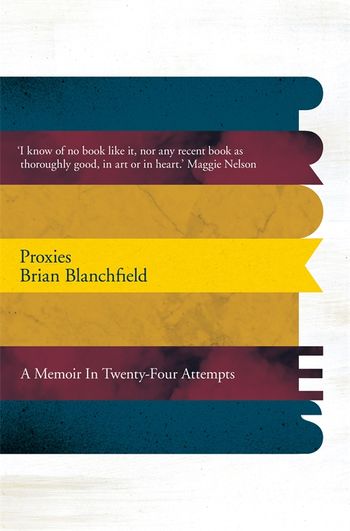
Reflecting on Brian Blanchfield’s essay, ‘On Peripersonal Space’, I am drawn toward conceptualising quasipersonal space and imagined extensions to the life of a person.
Like all people, I contain multitudes. This is too often a privileged assignation granted poets over ‘normal’ or ‘common’ folk, yet still we are the equal of anyone and poets are nothing better than sewer cleaners or street sweepers or politicians, on the inside of their skin. Yet more importantly to me, is the fact that I’ve killed so many selves now it becomes a pattern of self-abnegation arriving at, towards, non-existence.
For many, career suicide isn’t much more than a metaphor for doing something utterly stupid to one’s prospects. For myself this recurring process might have begun as an act of self-reinvention, but somehow instead reiterated through self-abnegation to the point of eradicating my sense of self. What a person I used to work with described as ‘dynamiting one’s own life’. I struggle to admit, as I still feel a significant amount of loathing for them and, being honest, this really seemed nothing more than an act of posturing probably brought on from the one or two bouts of therapy or counselling they went through and was latched onto for its dramatic nature, but it started as narrative for a process I learned about from a person who exploited and abandoned others and failed through an extreme lack of empathy for anything outside of their narcissistic, Lacanian mirror-loop to recognise the collateral damage of such dynamiting.
At the least it is a narrative of a process I find helpfully explains how I have arrived at a state of non-existence, with respect quasipersonal space. At best, that sounds Buddhist. At worst, probably quite depressed.
Perception is utterly critical to poets, who are, essentially, emotional alembics for attending to the world. More than just simple acts of sensing, there is a further, deeper language of framing the biases we bring to sensory perception. Mechanics of distance, misapprehension, comprehension, range and reason. Some points in this constellation:
Blanchfield focuses on peripersonal space, the immediately tactile component to the sensorium: “Think da Vinci, and the geometry of his jumping jack in extremis sketch… everything at arm’s length” or the inside of a car, from the driver’s seat, which “extends perhaps to the push lock on the passenger door” (87). Sight and hearing extend far beyond peripersonal touch, but are still limited both by the body and by environmental conditions: day or night, fog and woods, a clear hilltop, the grounding roar of traffic near or far drowning the howling of the wolves in the forest.
Alfred North Whitehead describes ‘prehensions’, loosely, as a part of the process of sensing: an encounter or experience accompanied by a relationality. Not just, I see a creature, but does this creature want to eat me? Does this brilliantly purple flower smell nice? Will the sun beating down on my skin cause me to overheat, boil alive, tan me to a sexy shade or blister me in cancers all over my face? The act of prehending is to me localised, limited by range, insofar as we can sense things from far away in the immediacy of our range.
The accompanying relationality is more than just the interpretation of the sensorium. Dubbed oikeios by Jason W Moore, relations allow for the stock of prejudices, prior histories and values we bring to the prehension. Are we hungry enough to eat the plant in front of us? Hunt and kill the rats running along the opposite riverbank? Apply sunscreen against the freakishly penetrating sunlight? Blame immigrants or climate change, for everything? Oikeios is inflected by both personal and social.
Beyond the prehended world lies the unperceived yet sensible world. The stain of internal combustion engines in ear shot everywhere in this cursed, petrophagic island indicates what lies beyond our direct sensory perception: nitrous-stenched highways and throughways. Airplanes smear the sky’s imagined void with more pollution. In daylight, or under clouds at night, Eve asking Adam if the stars go away when she can’t see them (Milton believing only man the conduit to a woman’s higher thinking).
The unsensed can dwell within our peripersonal spaces: tyre erosion, particulate matter, volatile organic compounds,; all manner of hidden violence lurks in the air. The sensorium is an uneven combination of limits, yet at some point stops, gives way to trust that something is still there. And the overlap becomes messy, entangled. Global climate conditions perceived through the hosepipe ban. The destructive tsunami, forest fires, mass shooting, megastorm and flash floods watched one the news in the comfort of one’s living room.
Beyond the sensed and the sensible, many people claim to perceive the joys, horrors, and flat, despairing nothingness of second realms. Knowing there is something there even when their fingers, eyes, ears, tongues and noses bring nothing to them. Prehensions of the immaterial world, like the serial killer stalking you from room to room when you’re alone in a house at night, just to move your keys or phone somewhere you can’t find them, driving you into a very real state of terror. The imagined or believed-in godhead malingering behind the skin of reality.
Further, there is the value one brings to those relationships. Does one give two shits about the overheating planet? The freak weather events? The drowning, burning, freezing and droughting on the other side of the planet: does one’s range-limited sensorium refute it thus? Does one donate a tiny fraction of one’s wealth to a charity to assuage the mounting guilt? Do you, like me, wear a filtration mask on the tube to stop the dense particles filling your lungs? Or out walking in the densely polluted air of your city, during the day? Are you sure it’s there, when your eyes only bring you weird looks and wide berths. Despite precautions, do you spend your nights choking and coughing on something as invisible as nanobots, 5G brain control robots?
Quasipersonal space might even be necessary to survival. Imagine yourself buried alive in a coffin, no room to move, barely any air, no sound but your own weak screaming for help, no smell but your sweat and fear quickly fading into normality, the sheer darkness of the sealed box. You could sing yourself unconscious, hasten the exhaustion of oxygen, but what if the space breathes sufficiently that you simply pass out and wake to find yourself still there? The feel of the padding inside the coffin, or were your captors cruel enough to give you nothing but bare wood?
Our imagination becomes an extension of reality, the prehending space giving way to quasipersonal opportunities. The vividity of memory. Space flight, as Stapledon’s character uses to escape the dissatisfaction, the coffin, of a negative homespace, headspace. A technique used by the military to overcome torture, relocating the brain into the quasipersonal, where violence, suffocation, interrogation, does not penetrate.
At some point, our own bodies may become coffins, reducing the peripersonal to a snare as elaborate and suffocating as the one Hephaistos caught Ares and Afroditi in. The trap of reduced mobility can be as blunt as facing a building with only stairs for entry. What are we to do with these traps? Stay home and rage, or imagine a quasipersonal society beyond the perceived?
These many selves we construct for ourselves can also fail, fall into traps. The values one builds into self-actualisation through which to perceive the world. Imagine you were a miner, able to see the world through an extractivist optic. The forest you walk through on weekends with your family opens possibilities for profit under your feet. A quarry here. An abundance of critical minerals there. Or the woodcarver seeing shapes inhabiting the trees: furniture, weaponry, weird fertility idols.
And the poet, a self constructed to see through a quasipersonal emotive lenses. Or the teacher seeing the potential future human in their students. The fitness instructor finding muscle and movement and health inside a stroke victim, using their values, their learning, to change the world.
The actor, climbing inside each role, seeing the world through their values, prehending every meal, every encounter, as if they were someone else. Dying on stage night after night, then resurrecting a quasipersonal space, oikeios and sensory capacities, motive and mechanism.
The multitudes I have been. I’ve killed everyone one of my selves, one after another. The only consistency becomes the suicide of another self: administrator, poet, publisher, teacher, academic, researcher, reviewer, creative producer, gardener, politician, activist. The poet put out a third, posthumous book this year, after killing himself two or three years ago.
Arriving at non-existence, a dead space where possibility, potential, only arrives at further dead space. The defibrillator lifting the line on the oscillator, hysteria invited into a body that returns to a flatline. A foray out of the peripersonal, the quasipersonal, used to be a game without fear of failure. But how can the dead perceive anything? Do anything? The whole species seems to hang into the grave from a frayed wire ready to snap. Mass extinction event. Unlivable chaos ahead. Collapsing food system. Late capitalism spilling into extremism. War and weather-driven mass immigration. Extremes of inequality.
How can one imagine a life under these conditions? How can one begin to prehend anything beyond the next meal? What can we plan for without feeling dust in our hands, on our tongues?
I used to think auto-da-fé meant self-immolation. The burning of selves in a Buddhist fire, until the oikeios evaporated. Yet it means act of faith, terror like no other. The point at which we no longer have the faith to invent another quasipersonal space for survival. Nothing but the peripersonal; nirvana consigning us to a peripersonal hell without meaning.
Kathe Koja, The Cipher
Simon Marsh, Planning for Nature
Georges Perec, Things
Flann O’Brien, The Poor Mouth
Izzeldin Abuelaish, I Shall Not Hate
Jorie Graham, [To] The Last [Be] Human
James Joyce, Ulysses (this may be here a while)
To love is merely to grow tired of being alone: it is therefore both cowardly and a betrayal of ourselves.
Vicente Guedes (Fernando Pessoa), The Book of Disquiet, trans. Margaret Jull Costa